


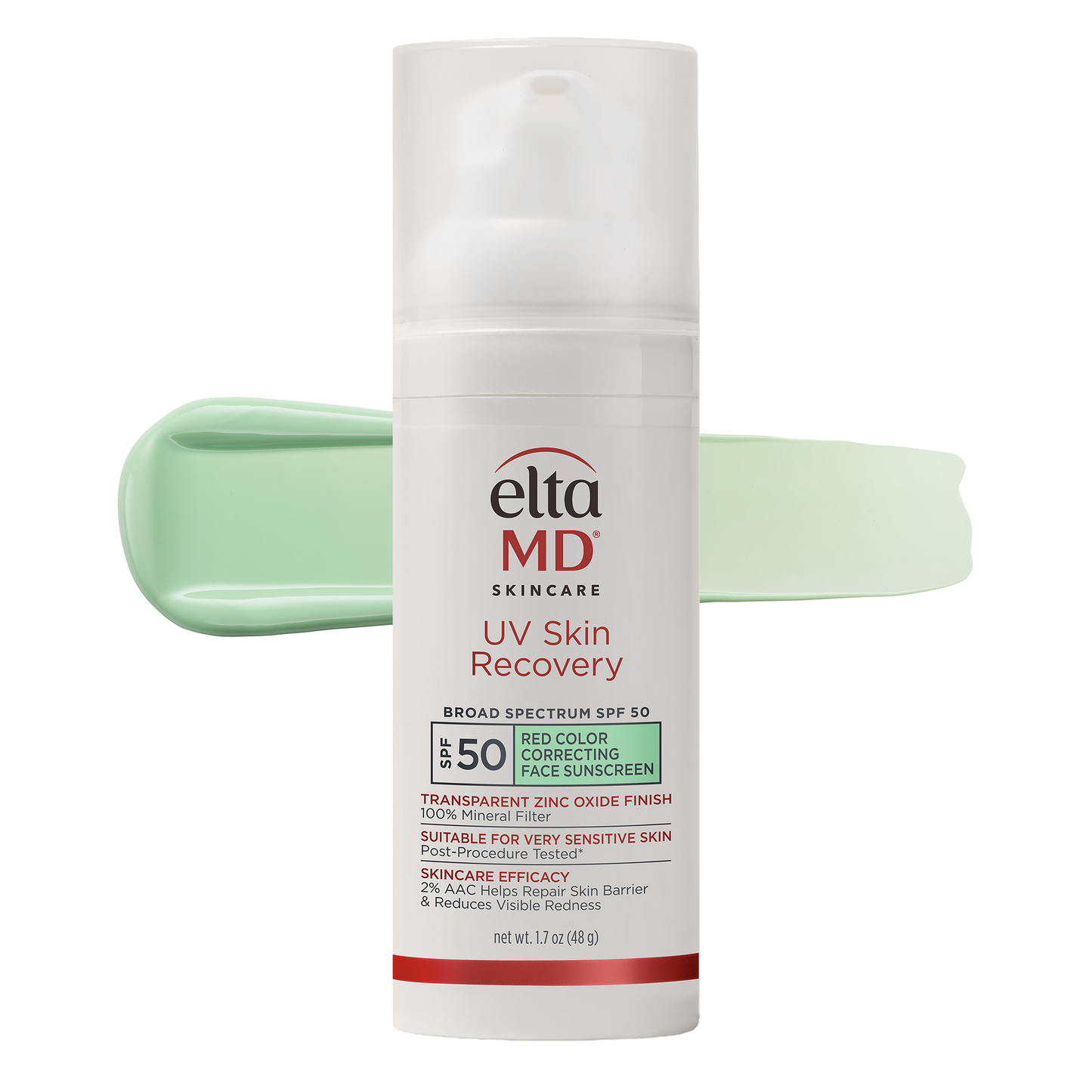
EltaMD UV Skin Recovery Face Sunscreen with Zinc Oxide, All Mineral, Safe for Sensitive Skin SPF 50
EltaMD UV Skin Recovery Face Sunscreen with Zinc Oxide, All Mineral, Safe for Sensitive Skin SPF 50
For over 30 years we have been developing safe and effective professional skin care products for every body under the sun. We are not only the #1 Dermatologist-recommended and trusted professional sunscreen brand, but Dermatologists use EltaMD personally more than any other professional sunscreen.Our products are designed to feel weightless and proven to protect, and help to renew skin
BUNDLE & SAVE
Couldn't load pickup availability

EltaMD UV Skin Recovery Face Sunscreen with Zinc Oxide, All Mineral, Safe for Sensitive Skin SPF 50
Features
Features
Acne treatment and sun protection
Introducing a breakthrough in suncare from the #1 Dermatologist Recommended Professional Sunscreen Brand.EltaMD UV Clear Blemish-Prone & Oil Balancing SPF 50is a lightweight, hybrid sunscreen specifically designed for and tested on acne-prone skin. This advanced formula allows you to protect and correct without compromise, offering a long-desired solution for those often forced to choose between sun protection and clear skin.
green hue
- Instantly Neutralizes Redness: Clinically proven to reduce the look of redness by 14% in just 15 minutes¹. A subtle green tint visibly blends into most skin tones, blurring imperfections and calming the look of redness for an even, balanced complexion.
- Soothes & Calms Sensitive Skin: Protect and repair even the most sensitive skin barriers. This SPF features a unique blend of gentle yet efficacious ingredients suitable for rosacea-prone² and post-procedure³ skin.
- #1 Dermatologist-Trusted Protection Rely on our award-winning, 100% mineral SPF 50 formula for superior broad-spectrum protection that's gentle enough for sensitive and even post-procedure skin.
- Gentle, Fast-Absorbing Formula: The silky, oil-free, hypo-allergenic and non-comedogenic formula absorbs quickly without a heavy or greasy feel, making it perfect for daily wear under makeup or on its own.


Choose one of two


EltaMD UV Clear Blemish-Prone & Oil Balancing SPF 50
Ingredients
Ingredient Insights:
11% Zinc Oxide: Mineral filter that delivers gentle broad spectrum UVA/UVB protection and is known for anti-inflammatory properties
3.5% Octinoxate: Lightweight chemical filter that absorbs UVB rays
5% Niacinamide (Vitamin B3): High-purity ingredient that helps reduce the appearance of blemishes and improves overall skin complexion
Zinc-AOX Pro Technology: A blend of 4 antioxidants with Zinc Oxide to boost photostability and help protect skin from 5 enviromental stressors: UV rays, blue light, HEVL, smog and diesel exhaust
Inactive Ingredients: Water, Dimethicone, Niacinamide, Ethylhexyl Methoxycrylene, Octyldodecyl Neopentanoate, Acrylate/Sodium Acryloyldimethyl Taurate Copolymer, Phenoxyethanol, Polyisobutene, Triethoxycaprylylsilane, Tocopheryl Acetate, Carnosine, Bisabolol, Tocopherol, PEG-7 Trimethylolpropane Coconut Ether, Pongamia Pinnata Seed Extract, Oleth-3 Phosphate, Lactic Acid, Sodium Hyaluronate, Zingiber Officinale (Ginger) Root Extract.
Ingredients may change, due to regulatory labeling requirements. Please refer to the actual product packaging for the most current information.
EltaMD UV Skin Recovery Red Color Correcting Green Tint Broad Spectrum SPF 50
Ingredients
Ingredient Insights:
2% AA Complex Barrier Repair Technology: A patented blend of 3 amino acids that are proven to repair the skin barrier, visibly reduce redness, minimize the risk of irritation & help reduce sun damage
Ceramide Blend: Nourishes skin and strengthens the skin barrier
Centella Asiatica: A powerful herbal plant that helps calm sensitive or compromised skin
12.9% Zinc Oxide: Gentle on sensitive skin, this 100% mineral filter protects your skin from damaging UVA (aging) and UVB (burning) rays
Inactive Ingredients: Water, Dimethicone, Butyloctyl Salicylate, Caprylic/Capric Triglyceride, Ethylhexyl Methoxycrylene, Octyldodecyl Neopentanoate, Taurine, Hydroxyethyl Acrylate/Sodium Acryloyldimethyl Taurate Copolymer, Butylene Glycol, Phenoxyethanol, Cetearyl Alcohol, Arginine, Triethoxycaprylylsilane, Oleth-3 Phosphate, Oleth-20, Coco-Glucoside, Polyisobutene, Polyhydroxystearic Acid, PEG-7 Trimethylolpropane Coconut Ether, Salicyloyl Phytosphingosine, Tocopheryl Acetate, Glycerin, Tocopherol, Ethylhexylglycerin, Pongamia Pinnata Seed Extract, Glycine, Lactic Acid, Polyglyceryl-10 Stearate, Centella Asiatica Leaf Extract, Triethyl Citrate, Polyglyceryl-6 Behenate, Behenic Acid, Ceramide NP, Cholesterol, Glyceryl Stearate, Ceramide NS, Ceramide EOP, Ceramide AP, Sodium Cetearyl Sulfate, Yellow 5, Blue 1
Ingredients may change, due to regulatory labeling requirements. Please refer to the actual product packaging for the most current information
How to use
- Apply liberally to the face and neck 15 minutes before sun exposure.
- Reapply at least every 2 hours.
For strengthened skin that is more resilient to future damage, redness and sensitivity
-

Hypoallergenic
-

Oil-Free
-

Fragrance-Free
-

Paraben-Free
-

Dermatologically Tested
-

Suitable for Sensitive Skin
-

Noncomedogenic


Proven to repair your skin barrier day after day*
- -52% visible redness*
- -72% dryness*
- 50% texture improvement*


100% mineral sunscreen
Impressively lightweight
Non-greasy finish
No white cast


NEW UV SKIN RECOVERYClinically proven results forstronger, less sensitive skin*
*12-week study, preformed on 45 female subjects, all skin type complexions and sensitive skin
EltaMD FAQs:
What does "broad-spectrum" mean on sunscreens?
What does "broad-spectrum" mean on sunscreens?
The broad-spectrum test measures a product’s ultraviolet A (UVA) protection relative to its ultraviolet B (UVB) protection. Sunscreens that pass this test may be labeled as “Broad-Spectrum SPF (value)” on the front of their label. For broad-spectrum sunscreens, SPF values also indicate the amount or magnitude of overall protection. Broad-Spectrum SPF products with SPF valued higher than 15 provide greater protection and may claim additional uses. Only broad-spectrum sunscreens with an SPF value of 15 or higher can claim to reduce the risk of skin cancer and early skin aging if used as directed with other sun protection measures. Non-broad-spectrum sunscreens and broad-spectrum sunscreens with an SPF value between 2 and 14 can only claim to help prevent sunburn.
What does the SPF value on sunscreen mean?
What does the SPF value on sunscreen mean?
SPF or sunburn protection factor indicates the UVB/sunburn protection provided by sunscreen. The SPF value indicates the level of sunburn protection provided by the sunscreen product. All sunscreens must be tested according to an SPF test procedure. The test measures the amount of ultraviolet (UV) radiation exposure it takes to cause sunburn when a person is using a sunscreen in comparison to how much UV exposure it takes to cause sunburn when they do not use a sunscreen. The product is then labeled with the appropriate SPF value indicating the amount of sunburn protection provided by the product. Higher SPF values provide greater sunburn protection. Because SPF values are determined from a test that measures protection against sunburn caused by ultraviolet B (UVB) radiation, SPF values only indicate a sunscreen’s UVB protection. However, sunscreens that pass the new broad-spectrum test will have demonstrated that they also provide ultraviolet A (UVA) protection that is proportional to their UVB protection.
Sources: U.S. Food and Drug Administration
https://www.fda.gov/drugs/understanding-over-counter-medicines/questions-and-answers-fda-announces-new-requirements-over-counter-otc-sunscreen-products-marketed-us
What is the meaning of the PA rating on sunscreen?
What is the meaning of the PA rating on sunscreen?
What is the meaning of the PA rating on sunscreen?
Every EltaMD sunscreen is PA+++ rated.
PA measurement is how the Japanese convert a standard UVA score from a PPD test into their version of UVA measurement for sunscreens. Japan is one of five countries that has a UVA measurement rating system. For the Japanese rating system the PPD score corresponds to a PA designation:
If PPD = 2-4, then PA = PA+
If PPD = 4-8, then PA = PA++
IF PPD = 8 and higher, then PA = PA+++
PPD ratings are the ratings used to assess UVA protection for sun screens. There are currently only five countries that employ some form of UVA testing: Australia (NZ), Japan, United Kingdom, Germany and the US. All but Germany and the US use PPD testing.
PPD is by itself not used as an indicator of UVA protection, but is converted into a score used by a country or region. For example in Japan they use a conversion system wherein the PPD score is converted to a “Protection of UVA” score or PA. Sunscreens are assigned one, two or three plus symbols (+) depending upon the PPD score derived from UVA testing. This designation would be required to be placed on the label of a product.
I left my EltaMD sunscreen out in the heat. Will this ruin the product?
I left my EltaMD sunscreen out in the heat. Will this ruin the product?
High temperature may cause the ingredients to separate or appear “unblended”. However, the sun protection properties are not affected by temperatures up to 122 degrees F (50 degrees C), the maximum at which the product is tested. Exposure to higher temperatures is a misuse of the product.